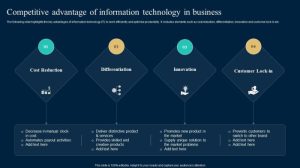
Sustaining a competitive edge in today’s dynamic marketplace requires a multifaceted approach. Businesses must not only identify their unique strengths but also proactively adapt to evolving consumer demands, technological disruptions, and intensified competition. This exploration delves into the core strategies that enable companies to not only survive but thrive, examining key areas such as innovation, operational efficiency, customer relationship management, and strategic partnerships.
We’ll explore proven models and frameworks to help businesses build a robust and sustainable competitive advantage.
From analyzing market landscapes and identifying key competitors to implementing lean manufacturing principles and fostering a culture of innovation, this comprehensive guide provides a practical roadmap for businesses seeking long-term success. We’ll examine case studies of companies that have successfully navigated challenges and built enduring competitive advantages, offering valuable insights and actionable strategies for your own organization.
Defining Competitive Advantage
A competitive advantage allows a firm to outperform its rivals and achieve superior profitability. It’s not simply about being better; it’s about creating and sustaining a position that is difficult for competitors to replicate or imitate. This sustained advantage is crucial for long-term success in a dynamic marketplace.A sustainable competitive advantage rests on several core components. First, it requires a valuable resource or capability that provides a significant benefit to customers.
Second, it must be rare, meaning few competitors possess it. Third, it needs to be inimitable, difficult for rivals to copy or substitute. Finally, it must be non-substitutable; there shouldn’t be readily available alternatives offering similar value. These four characteristics – value, rarity, inimitability, and non-substitutability – are often summarized using the VRIN framework.
Examples of Companies with Strong Competitive Advantages
Apple consistently demonstrates a strong competitive advantage through its brand loyalty, a seamlessly integrated ecosystem of hardware and software, and a reputation for design excellence. This creates a powerful barrier to entry for competitors. Their loyal customer base consistently chooses Apple products despite often higher prices, demonstrating the strength of their brand and ecosystem. Similarly, Amazon’s dominance in e-commerce is rooted in its massive scale, sophisticated logistics network, and vast data-driven insights, allowing them to offer unparalleled convenience and competitive pricing.
Their ability to leverage data for personalized recommendations and efficient operations creates a substantial advantage. Finally, consider Coca-Cola’s brand recognition and global distribution network. Decades of marketing and a pervasive presence have created an almost insurmountable brand recognition and consumer preference, which forms a significant barrier to entry for competitors.
Models for Analyzing Competitive Advantage
Analyzing competitive advantage requires frameworks that can effectively assess a firm’s strengths and weaknesses relative to its rivals. Three prominent models provide valuable perspectives.The first is Porter’s Five Forces, which focuses on the competitive landscape by examining the bargaining power of suppliers and buyers, the threat of new entrants, the threat of substitute products, and the intensity of rivalry among existing competitors.
Its strength lies in its comprehensive view of the industry environment, while a weakness is its relative simplicity; it may not capture the nuances of specific firm-level advantages.Second, the Resource-Based View (RBV) emphasizes the internal capabilities and resources of a firm as the source of competitive advantage. This model focuses on identifying valuable, rare, inimitable, and non-substitutable (VRIN) resources and capabilities.
Its strength lies in its focus on internal firm characteristics, but it can be challenging to accurately assess the value and inimitability of resources.Third, the Value Chain Analysis dissects a firm’s activities to identify sources of cost advantage or differentiation. By examining each stage of the value chain, from procurement to customer service, firms can pinpoint areas for improvement and innovation.
Its strength is its detailed examination of internal processes, but it can be complex to implement and may overlook the broader competitive landscape.
Innovation and Technology
Maintaining a competitive advantage in today’s rapidly evolving market landscape necessitates a proactive and strategic approach to innovation and technology. Businesses must not simply adopt new technologies, but rather leverage them to create unique value propositions, improve operational efficiency, and ultimately, outperform competitors. This requires a deep understanding of emerging technologies and a well-defined strategy for their integration into the core business operations.Leveraging technological advancements to maintain a competitive edge requires a multifaceted approach.
It involves not only the adoption of new technologies but also the development of internal capabilities to effectively utilize and adapt them. This includes investing in research and development, fostering a culture of innovation, and cultivating strong partnerships with technology providers. Crucially, it also necessitates a continuous process of monitoring the competitive landscape and anticipating future technological disruptions.
Technological Innovation Strategies
Several key strategies can be employed to leverage technology for competitive advantage. These include investing in research and development to create proprietary technologies, strategically partnering with technology companies to access cutting-edge solutions, and building robust data analytics capabilities to extract actionable insights from operational data. Furthermore, businesses should prioritize the development of agile and adaptable processes to quickly integrate and utilize new technologies as they emerge.
Finally, a commitment to continuous learning and upskilling the workforce is crucial to ensure the effective utilization of advanced technologies.
Hypothetical Innovation Roadmap: The Electric Vehicle Industry
This roadmap focuses on a hypothetical mid-sized electric vehicle (EV) manufacturer aiming to establish a strong competitive position within the next decade.
| Milestone | Timeline | Technology Focus | Potential Challenges |
|---|---|---|---|
| Develop a next-generation battery technology with significantly improved energy density and charging speed. | Years 1-3 | Materials science, battery chemistry, thermal management | High R&D costs, securing supply chains for rare earth materials, managing battery safety concerns. |
| Launch a fully autonomous driving system integrated into new EV models. | Years 4-6 | Artificial intelligence, sensor technology, software development | Regulatory hurdles, ensuring system safety and reliability, competition from established players. |
| Establish a nationwide network of fast-charging stations. | Years 3-7 | Power grid infrastructure, charging technology, site acquisition | High capital expenditure, securing land permits, managing energy consumption. |
| Develop and implement a personalized in-car entertainment and infotainment system leveraging advanced AI and connectivity. | Years 7-10 | Software development, cloud computing, user interface design | Data privacy concerns, maintaining system security, adapting to evolving consumer preferences. |
Intellectual Property Protection
Protecting intellectual property (IP) is paramount for sustaining a competitive advantage. Strong IP protection prevents competitors from copying innovative technologies, designs, or brands, thus preserving market share and ensuring long-term profitability. A comprehensive IP strategy should encompass various methods depending on the nature of the innovation.
| Method | Description | Cost | Duration |
|---|---|---|---|
| Patents | Exclusive rights granted for an invention (product, process, or design). | High (filing, prosecution, maintenance fees) | Varies by jurisdiction (typically 20 years from filing date). |
| Trademarks | Protection for brand names, logos, and other identifying marks. | Moderate (filing, renewal fees) | Potentially indefinite, subject to renewal. |
| Copyrights | Protection for original works of authorship (literary, artistic, musical). | Low (registration optional) | Life of the author plus 70 years (or shorter duration for corporate works). |
Operational Excellence
Operational excellence forms a crucial cornerstone of a sustainable competitive advantage. By streamlining internal processes, companies can significantly reduce costs, enhance efficiency, and ultimately deliver superior value to customers. This involves a holistic approach, encompassing everything from supply chain management to production methodologies. A focus on operational excellence translates directly into improved profitability and a stronger market position.
Optimizing internal processes for cost reduction and efficiency improvement requires a multifaceted strategy. This includes identifying and eliminating bottlenecks in workflows, leveraging technology to automate repetitive tasks, and fostering a culture of continuous improvement. Data-driven decision-making plays a vital role, allowing companies to pinpoint areas needing attention and track the effectiveness of implemented changes. Investing in employee training and development is also crucial, equipping the workforce with the skills needed to execute these improvements effectively.
Ultimately, a successful operational excellence strategy is one that is adaptable and responsive to changing market conditions.
Implementing Lean Manufacturing Principles
Lean manufacturing, a systematic approach to eliminating waste and maximizing value, offers a powerful framework for optimizing operational efficiency. Implementing lean principles requires a phased approach, focusing on continuous improvement rather than a single, sweeping change.
- Value Stream Mapping: Begin by visually mapping the entire production process, identifying all steps involved and highlighting areas of waste (e.g., excess inventory, unnecessary movement, waiting time). This provides a clear picture of the current state.
- Identify and Eliminate Waste: Based on the value stream map, systematically eliminate sources of waste. This might involve streamlining processes, improving workflow, or reducing inventory levels. Common types of waste include overproduction, waiting, transportation, inventory, motion, over-processing, and defects.
- Implement Kaizen Events: Conduct short, focused improvement events involving cross-functional teams to tackle specific problems. These events foster collaboration and drive rapid improvements.
- Standardize Work: Develop standardized work procedures to ensure consistency and minimize variation. This reduces errors and improves predictability.
- Continuous Improvement (Kaizen): Establish a culture of continuous improvement, encouraging employees to identify and suggest improvements on an ongoing basis. Regularly review and update processes to reflect best practices.
Supply Chain Management Strategies and Their Impact on Competitive Advantage
Effective supply chain management is paramount to operational excellence and achieving a competitive edge. Different strategies cater to varying business needs and market dynamics.
The choice of supply chain strategy significantly impacts a company’s ability to respond to market changes, control costs, and maintain product quality. A well-designed strategy can enhance responsiveness, reduce lead times, and improve overall efficiency, contributing directly to a stronger competitive position.
- Agile Supply Chain: This strategy focuses on flexibility and responsiveness to changing customer demands. It emphasizes speed and adaptability, often utilizing smaller, more frequent production runs.
- Example: A fashion retailer using a just-in-time manufacturing model to quickly adapt to trending styles.
- Lean Supply Chain: This approach prioritizes efficiency and waste reduction throughout the entire supply chain. It emphasizes continuous improvement and close collaboration with suppliers.
- Example: A car manufacturer implementing Kanban systems to manage inventory and streamline production.
- Resilient Supply Chain: This strategy emphasizes robustness and the ability to withstand disruptions. It involves diversifying sourcing, building excess capacity, and developing contingency plans.
- Example: A pharmaceutical company establishing multiple manufacturing sites to mitigate the risk of supply chain interruptions.
Customer Focus and Relationship Management
In today’s competitive landscape, cultivating strong customer relationships is no longer a mere advantage; it’s a necessity for sustained success. Building brand loyalty translates directly into repeat business, positive word-of-mouth marketing, and ultimately, a significant competitive edge. This section explores best practices for nurturing customer relationships and leveraging them for competitive advantage.Building strong customer relationships requires a multifaceted approach, going beyond simple transactional interactions.
It necessitates understanding customer needs, exceeding expectations, and fostering a sense of genuine connection. This involves personalized communication, proactive problem-solving, and consistent delivery on promises. Companies that prioritize customer relationships often see higher customer lifetime value and reduced customer churn.
Best Practices for Building Strong Customer Relationships and Fostering Brand Loyalty
Effective customer relationship management (CRM) involves several key strategies. These strategies work in tandem to create a positive and lasting impression on the customer. A holistic approach is vital.
- Personalized Communication: Tailoring communications to individual customer preferences, using their name, and addressing their specific needs creates a sense of value and personalization. For example, sending targeted email campaigns based on past purchases or browsing history significantly increases engagement.
- Proactive Customer Service: Anticipating and addressing customer needs before they become issues demonstrates a commitment to customer satisfaction. This could involve proactively contacting customers to address potential problems or offering assistance based on their purchase history.
- Loyalty Programs: Rewarding loyal customers with exclusive benefits, discounts, or early access to new products incentivizes repeat business and strengthens brand loyalty. Examples include points-based systems, tiered rewards, and exclusive member events.
- Feedback Mechanisms: Actively soliciting and responding to customer feedback demonstrates a commitment to continuous improvement. This could include surveys, online reviews, and social media monitoring.
- Community Building: Creating a sense of community around the brand fosters customer loyalty and engagement. This can involve online forums, social media groups, or in-person events.
Marketing Campaign to Enhance Customer Engagement and Satisfaction
A successful marketing campaign aimed at enhancing customer engagement and satisfaction needs to be multi-channel and data-driven. The focus should be on creating valuable and personalized experiences.This campaign would utilize a combination of email marketing, social media engagement, and personalized website content. For instance, email marketing could focus on providing valuable content relevant to the customer’s interests, while social media engagement could involve interactive polls, contests, and Q&A sessions.
Personalized website content, such as product recommendations based on past purchases, further enhances the customer experience. The ultimate goal is to create a seamless and positive experience across all touchpoints.
Key Metrics for Measuring Customer Satisfaction and Loyalty
Measuring customer satisfaction and loyalty provides crucial insights into the effectiveness of customer relationship management strategies. These metrics are vital for identifying areas for improvement and demonstrating the return on investment of customer-centric initiatives.
- Customer Satisfaction (CSAT) Score: This measures how satisfied customers are with a particular product, service, or interaction. A high CSAT score indicates strong customer satisfaction.
- Net Promoter Score (NPS): This measures customer loyalty and willingness to recommend a brand to others. A high NPS score indicates strong brand loyalty.
- Customer Churn Rate: This measures the percentage of customers who stop doing business with a company over a specific period. A low churn rate indicates strong customer retention.
- Customer Lifetime Value (CLTV): This predicts the total revenue a customer will generate throughout their relationship with a company. A high CLTV indicates strong customer value.
- Customer Effort Score (CES): This measures how easy it is for customers to interact with a company. A high CES score indicates a positive customer experience.
These metrics, when tracked and analyzed, provide a comprehensive understanding of customer sentiment and loyalty, allowing for data-driven improvements in strategies and a stronger competitive advantage. For example, a declining NPS score might indicate a need to improve customer service processes, while a high churn rate might signal a need to address product or pricing issues.
Strategic Partnerships and Alliances
Strategic partnerships and alliances represent a powerful tool for businesses seeking to enhance their competitive advantage. By collaborating with other organizations, companies can access new resources, expand their market reach, and gain a competitive edge in the marketplace. However, forming such alliances also carries inherent risks that need careful consideration and mitigation. A well-structured approach to partnership selection and management is crucial for maximizing benefits and minimizing potential drawbacks.Strategic alliances offer several key benefits.
Access to new markets and technologies is a primary advantage; collaborating with a partner already established in a target market can significantly reduce entry barriers and costs. Furthermore, shared resources and expertise can lead to cost efficiencies and improved operational effectiveness. Pooling resources can also facilitate innovation, leading to the development of new products and services that neither partner could achieve independently.
Finally, enhanced brand reputation and increased market share are common outcomes of successful strategic alliances.
Benefits and Risks of Strategic Alliances
The benefits of strategic alliances are numerous, including access to new markets, technologies, and resources, leading to increased efficiency, innovation, and market share. However, potential risks exist. These include conflicts of interest, differing corporate cultures, and the potential for unequal sharing of benefits or control. A thorough due diligence process and clearly defined agreements are essential to mitigate these risks.
For example, disagreements over intellectual property rights or profit sharing can severely damage the alliance if not addressed proactively in the initial contract. Furthermore, a lack of trust or communication between partners can lead to project delays and ultimately, failure.
Examples of Successful Strategic Alliances
The success of a strategic alliance hinges on several key factors, including shared goals, compatible cultures, and clear communication. A prime example is the alliance between Starbucks and Barnes & Noble. This partnership leveraged the strengths of both companies – Starbucks’ coffee expertise and Barnes & Noble’s bookstore network – creating a synergistic environment that benefited both. The shared customer base and complementary offerings resulted in increased foot traffic and sales for both partners.
Another successful example is the collaboration between Apple and IBM, which combined Apple’s consumer-facing strengths with IBM’s enterprise solutions expertise. This alliance resulted in the development of new products and services targeting the enterprise market, a segment neither company could effectively reach independently. The success of these alliances demonstrates the importance of selecting partners with complementary capabilities and a shared vision.
Framework for Evaluating Potential Strategic Partners
A robust framework for evaluating potential partners should consider several critical factors. Compatibility of corporate cultures and values is paramount; significant differences can lead to conflict and hinder collaboration. Synergy between the partners’ capabilities and resources is equally crucial; the alliance should create a value greater than the sum of its parts. Shared goals and objectives ensure alignment and prevent conflicts over strategic direction.
A thorough due diligence process, including financial and operational assessments, is essential to understand the partner’s capabilities and risks. Finally, the legal and contractual aspects of the alliance must be clearly defined to protect the interests of both parties. A comprehensive evaluation framework can significantly improve the chances of forming a successful and mutually beneficial strategic partnership.
Adaptability and Resilience

In today’s dynamic business environment, characterized by rapid technological advancements, shifting consumer preferences, and unexpected global events, the ability to adapt and demonstrate resilience is no longer a competitive advantage—it’s a necessity for survival. Companies that can swiftly respond to market changes and navigate unforeseen challenges are far more likely to not only endure but thrive. This section explores the critical role of adaptability and resilience in maintaining a competitive edge.Adaptability is the capacity to adjust strategies, processes, and structures in response to changing circumstances.
It involves anticipating potential disruptions, proactively seeking opportunities, and efficiently reallocating resources to capitalize on emerging trends. Resilience, on the other hand, refers to the ability to withstand shocks, recover quickly from setbacks, and learn from challenging experiences. It’s about building a strong foundation that can absorb unexpected blows and bounce back stronger. Both adaptability and resilience are intertwined and essential for long-term success.
Examples of Companies Demonstrating Successful Adaptation
Several companies have showcased remarkable adaptability in the face of significant market disruptions. Netflix, initially a DVD rental service, successfully transitioned to a streaming platform, anticipating the shift in consumer preferences towards on-demand digital content. This foresight and rapid adaptation allowed them to maintain and expand their market dominance. Similarly, Blockbuster’s failure to adapt to the rise of streaming services serves as a cautionary tale highlighting the critical importance of responsiveness to market changes.
Another example is the evolution of Nintendo, who adapted from solely creating home consoles to incorporating mobile gaming and developing unique gaming experiences across various platforms, thus retaining their relevance.
Strategies for Building Organizational Resilience
Building organizational resilience requires a multifaceted approach. One crucial element is fostering a culture of innovation and continuous improvement. This involves encouraging experimentation, embracing failure as a learning opportunity, and promoting open communication and collaboration across all levels of the organization. Investing in robust risk management systems is also vital. This includes identifying potential threats, assessing their likelihood and impact, and developing contingency plans to mitigate their effects.
Diversification of product offerings, markets, and supply chains can also enhance resilience by reducing dependence on single sources of revenue or supply. Furthermore, cultivating a strong and adaptable workforce through continuous training and development programs is paramount. Employees who are equipped with the necessary skills and knowledge are better positioned to respond effectively to change and contribute to the organization’s overall resilience.
Competitive Analysis and Market Positioning
Understanding your competitive landscape is crucial for sustained competitive advantage. A thorough competitive analysis allows businesses to identify opportunities, mitigate threats, and refine their strategies for optimal market positioning. This involves a deep dive into the actions and capabilities of key players, enabling informed decision-making and proactive adaptation to market shifts.Competitive analysis isn’t simply about identifying rivals; it’s about understanding their strengths, weaknesses, and strategic moves.
This knowledge forms the foundation for effective market positioning, allowing a company to carve out a unique and defensible space within the market. By understanding where competitors excel and where they falter, a company can leverage its own strengths and exploit competitor weaknesses.
Identifying Key Competitors and Analyzing Their Strengths, Weaknesses, and Strategies
Identifying key competitors requires a multifaceted approach. It goes beyond simply listing companies offering similar products or services. It involves analyzing market share, customer overlap, and strategic objectives. For example, in the fast-food industry, McDonald’s might consider Burger King and Wendy’s as direct competitors, but also needs to consider indirect competitors like Subway or Chipotle, which target a similar customer base, even with different product offerings.
Analyzing their strengths, weaknesses, and strategies necessitates examining factors such as their pricing models, marketing campaigns, product innovation cycles, and supply chain management. A detailed competitor profile should be created for each key player, highlighting these aspects. For instance, a competitor might have a strong brand reputation (strength) but struggle with high operational costs (weakness), influencing its strategic choices.
Developing a Detailed Competitive Analysis Report
A comprehensive competitive analysis report provides a structured overview of the market landscape. It typically includes market sizing and growth projections, an assessment of market segmentation, and a detailed analysis of key competitors. The report should quantify market share for each major player, showing the relative dominance within the market. For instance, a report on the smartphone market would show the market share of Apple, Samsung, and other significant players.
Further, a competitive landscape analysis within the report should illustrate the relationships between competitors – are they collaborating, competing fiercely, or coexisting peacefully? This section often incorporates visual tools such as competitive matrices to represent the relative positions of different companies based on chosen criteria (e.g., price vs. quality). Data sources for such reports include market research firms, industry publications, and publicly available financial statements.
SWOT Analysis for a Hypothetical Company
Let’s consider a hypothetical company, “InnovateTech,” a startup developing innovative software solutions for small businesses.
| Strengths | Weaknesses | Opportunities | Threats |
|---|---|---|---|
| Strong R&D capabilities, experienced development team, unique software features. | Limited brand recognition, small customer base, reliance on a single product. | Growing demand for software solutions among small businesses, potential for strategic partnerships, expansion into new markets. | Intense competition from established players, potential for technological disruption, economic downturn impacting customer spending. |
This SWOT analysis provides a concise overview of InnovateTech’s internal capabilities and external environment, highlighting areas of strength to be leveraged and weaknesses to be addressed. It also identifies promising opportunities to pursue and potential threats to mitigate, guiding strategic planning and resource allocation.
Understanding Competitive Advantage
A sustainable competitive advantage is the bedrock of long-term success for any business. It represents a firm’s ability to consistently outperform its rivals, creating value for its stakeholders while resisting imitation. This advantage isn’t merely a temporary edge; it’s a strategically cultivated position that allows a company to maintain profitability and market share over an extended period. Understanding the various strategies and their nuances is crucial for building and sustaining this advantage.Competitive advantage fundamentally boils down to two primary strategic approaches: cost leadership and differentiation.
These approaches aren’t mutually exclusive; some companies successfully integrate elements of both. However, understanding their core differences is essential for crafting an effective strategy.
Cost Leadership Strategy and Differentiation Strategy Compared
Cost leadership focuses on becoming the lowest-cost producer in the industry while maintaining acceptable quality. This allows the company to offer products or services at a lower price than competitors, attracting price-sensitive customers and capturing significant market share. Conversely, differentiation focuses on creating unique value for customers that justifies a premium price. This uniqueness might stem from superior product features, branding, customer service, or other factors that differentiate the offering from competitors.
Examples of Cost Leadership and Differentiation Strategies
Walmart exemplifies a successful cost leadership strategy. Through efficient supply chain management, economies of scale, and a focus on low-cost operations, they consistently offer everyday goods at competitive prices. In contrast, Apple employs a differentiation strategy. Their products are often priced higher than competitors, but they command strong brand loyalty due to their perceived superior design, user experience, and brand prestige.
These examples highlight the different approaches to achieving competitive advantage.
Achieving Sustainable Competitive Advantage
Achieving a trulysustainable* competitive advantage requires a multifaceted approach that combines innovation, efficiency, and customer focus. Innovation introduces new products, services, or processes that disrupt the market and create new value propositions. Efficiency streamlines operations, reducing costs and improving productivity, bolstering profitability. Finally, a strong customer focus ensures the company understands and responds to customer needs, building loyalty and generating positive word-of-mouth marketing.
The interplay of these three factors creates a powerful synergy that makes it difficult for competitors to replicate. A company that excels in all three areas builds a robust, long-lasting competitive advantage.
Ultimately, maintaining a competitive advantage is a continuous journey, not a destination. It requires a commitment to ongoing innovation, operational excellence, and a deep understanding of the customer. By strategically leveraging technology, fostering strong customer relationships, and adapting to market changes, businesses can build a resilient foundation for long-term success. The frameworks and strategies discussed here provide a valuable toolkit for navigating the complexities of the competitive landscape and securing a lasting competitive edge.
FAQs
What is the difference between a cost leadership and a differentiation strategy?
Cost leadership focuses on offering the lowest price in the market, while differentiation focuses on offering unique features or qualities that justify a higher price.
How important is employee engagement in maintaining a competitive advantage?
Highly engaged employees are more productive, innovative, and loyal, contributing significantly to a company’s competitive edge.
What are some common pitfalls companies make when trying to maintain a competitive advantage?
Common pitfalls include neglecting innovation, failing to adapt to market changes, poor customer service, and underestimating competition.
How can small businesses compete with larger corporations?
Small businesses can leverage agility, niche market focus, personalized service, and strong customer relationships to compete effectively.