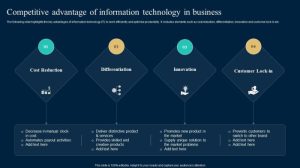
In today’s interconnected world, achieving and sustaining a global competitive advantage is paramount for businesses seeking sustained growth and profitability. This necessitates a deep understanding of market dynamics, resource allocation, and strategic positioning. The pursuit of global dominance requires more than simply exporting products; it demands a nuanced approach that considers cultural differences, regulatory landscapes, and evolving consumer preferences.
This exploration delves into the multifaceted strategies required to conquer global markets.
Successfully navigating the complexities of international competition involves identifying and leveraging unique strengths while mitigating inherent risks. This requires a comprehensive understanding of various competitive advantage models, from cost leadership to differentiation, and a willingness to adapt strategies based on fluctuating market conditions and emerging technological advancements. Ultimately, achieving and maintaining a global competitive advantage is a continuous process of adaptation, innovation, and strategic foresight.
Defining Global Competitive Advantage
Global competitive advantage refers to a firm’s ability to outperform its rivals in international markets by leveraging its unique strengths and capabilities. This advantage isn’t simply about being bigger or having more resources; it’s about strategically deploying assets and skills to achieve superior profitability and market share on a worldwide scale.Key elements contributing to a strong global competitive advantage include a deep understanding of diverse consumer preferences, efficient and flexible global supply chains, a strong brand reputation recognized internationally, innovative product development and adaptation to local markets, and cost-effective production and distribution networks.
These elements work synergistically; for example, a strong brand can facilitate premium pricing, while efficient supply chains allow for competitive pricing. The ability to adapt to local regulations and cultural nuances is also crucial.
Global versus Domestic Competitive Advantage
Global competitive advantage differs significantly from domestic competitive advantage in its scope and complexity. Domestic advantage focuses on outperforming competitors within a single country’s market. This involves understanding local consumer behavior, regulations, and competition. Global advantage, however, requires navigating diverse markets, managing international operations, and responding to global economic fluctuations. A company with a domestic advantage might excel in a niche market within its home country but lack the resources or strategy to compete effectively internationally.
Conversely, a company with a global advantage typically possesses a broader range of capabilities and a more sophisticated understanding of international business dynamics. The competitive landscape is vastly different; domestic competition is often more localized and predictable, while global competition is characterized by a wider range of competitors, varying regulatory environments, and fluctuating exchange rates.
Hypothetical Scenario: A Company with Strong Global Competitive Advantage
Imagine a hypothetical company, “GlobalTech,” a manufacturer of advanced medical imaging equipment. GlobalTech possesses a strong global competitive advantage due to several factors. Firstly, they have patented technology superior to competitors, granting them a significant technological edge. Secondly, they have established a robust global supply chain, sourcing components from multiple countries while maintaining high quality control. Thirdly, they’ve invested heavily in research and development, constantly innovating and adapting their products to meet the specific needs of different healthcare systems worldwide.
Fourthly, they have built a strong global brand reputation for reliability and cutting-edge technology, enabling them to command premium pricing. Finally, they have a skilled team of international managers capable of navigating diverse regulatory landscapes and cultural contexts. This combination of technological superiority, efficient operations, strong branding, continuous innovation, and skilled management allows GlobalTech to consistently outperform its competitors in multiple international markets.
Their global presence allows them to leverage economies of scale, mitigate risks associated with regional market downturns, and access a wider talent pool.
Sources of Global Competitive Advantage
Achieving and sustaining a global competitive advantage requires a deep understanding of the various factors that contribute to a firm’s success in the international marketplace. These sources are interconnected and often build upon one another, creating a complex interplay that determines a company’s overall competitiveness. This section will explore five key sources, illustrating their significance through real-world examples and acknowledging the inherent challenges in maintaining them.
Global Scale and Scope Economies
Global scale economies, achieved through large-scale production and distribution, significantly reduce per-unit costs. This allows firms to offer competitive pricing or invest more in research and development, further strengthening their competitive position. Scope economies, on the other hand, arise from leveraging shared resources and capabilities across different product lines or geographical markets. Both scale and scope economies are crucial for achieving cost leadership in a global context.
| Source of Advantage | Description | Company Examples | Challenges |
|---|---|---|---|
| Global Scale and Scope Economies | Cost reductions achieved through large-scale production and distribution, and by leveraging shared resources across multiple product lines or markets. |
|
Maintaining efficient global supply chains in the face of geopolitical instability, fluctuating exchange rates, and disruptions like pandemics. Balancing centralized control with local market responsiveness can also be challenging. |
Innovation and Technological Leadership
Continuous innovation and technological leadership are essential for maintaining a competitive edge in today’s rapidly evolving global market. Companies that consistently develop cutting-edge products and processes gain a significant advantage over their competitors. This often translates into premium pricing, increased market share, and stronger brand loyalty.
| Source of Advantage | Description | Company Examples | Challenges |
|---|---|---|---|
| Innovation and Technological Leadership | Developing and deploying cutting-edge technologies and products that provide superior value to customers. |
|
High investment costs in R&D, the risk of technological obsolescence, and the need to protect intellectual property in a global market are major challenges. Rapid technological change requires continuous adaptation. |
Superior Quality and Reliability
Building a reputation for superior quality and reliability is a powerful competitive advantage, especially in global markets where trust and brand image are crucial. Customers are willing to pay a premium for products and services that consistently meet or exceed their expectations. This approach can lead to greater customer loyalty and reduced warranty costs.
| Source of Advantage | Description | Company Examples | Challenges |
|---|---|---|---|
| Superior Quality and Reliability | Consistently delivering high-quality products and services that meet or exceed customer expectations. |
|
Maintaining consistent quality standards across multiple production facilities and global supply chains can be difficult. Meeting evolving customer expectations and adapting to different quality standards in various markets is also crucial. |
Strong Brands and Global Marketing
A strong brand provides a significant competitive advantage by building customer trust, loyalty, and recognition. Effective global marketing strategies are needed to communicate brand value and build a consistent brand image across diverse cultural contexts. This involves understanding local preferences and adapting marketing campaigns accordingly.
| Source of Advantage | Description | Company Examples | Challenges |
|---|---|---|---|
| Strong Brands and Global Marketing | Building a recognizable and trusted brand image, and communicating that value effectively across global markets. |
|
Maintaining brand consistency across diverse cultures and adapting marketing strategies to suit local preferences can be complex. Protecting brand reputation in the face of negative publicity or counterfeiting is also crucial. |
Effective Global Value Chain Management
Efficiently managing the global value chain—from sourcing raw materials to manufacturing, distribution, and after-sales service—is critical for achieving cost advantages and ensuring product quality. This requires effective coordination and collaboration across different geographical locations and organizational units.
| Source of Advantage | Description | Company Examples | Challenges |
|---|---|---|---|
| Effective Global Value Chain Management | Efficiently managing the flow of goods, information, and services across the entire value chain. |
|
Coordinating activities across multiple locations and time zones, managing risks associated with global supply chains (disruptions, geopolitical issues), and ensuring consistent quality and delivery times are significant challenges. |
Strategies for Achieving Global Competitive Advantage
Successfully navigating the complexities of the global marketplace requires a well-defined competitive strategy. Companies must leverage their strengths while mitigating weaknesses to establish a sustainable advantage. This involves careful consideration of various strategic approaches, each with its own set of benefits and drawbacks.
Global Cost Leadership
This strategy focuses on achieving the lowest production and distribution costs globally, allowing for competitive pricing. Companies pursuing this strategy often leverage economies of scale, efficient supply chains, and low-cost labor markets. They aim to be the most price-competitive player in the global market.Advantages include high market share potential due to lower prices and greater profitability if cost efficiencies are effectively managed.
Disadvantages include vulnerability to price wars, potential for sacrificing product quality to reduce costs, and the ethical considerations associated with low-cost labor practices. For example, Walmart’s global dominance is partly attributed to its mastery of global cost leadership.
Global Differentiation
This strategy involves offering unique products or services that are highly valued by customers worldwide. This uniqueness can stem from superior quality, innovative features, strong branding, or exceptional customer service. Companies prioritize creating a distinct identity and perceived value that justifies a premium price.Advantages include premium pricing power, stronger brand loyalty, and greater resilience to price competition. Disadvantages include higher production costs, potential difficulties in scaling operations to meet global demand, and the risk of imitation by competitors.
Consider Apple, which successfully differentiates its products through design, functionality, and brand image.
Global Focus
This strategy targets specific niche markets or customer segments globally, offering specialized products or services tailored to their unique needs. Companies often leverage their deep understanding of these niche markets to gain a strong competitive position. This approach allows for a higher degree of specialization and customer intimacy.Advantages include strong customer loyalty within the niche market, the potential for higher profit margins, and less direct competition.
Disadvantages include limited market reach, higher vulnerability to changes in niche market preferences, and challenges in expanding beyond the focused segment. A company specializing in luxury hand-crafted goods, for instance, might pursue a global focus strategy.
Comparative Analysis of Global Competitive Advantage Strategies
The choice of strategy depends heavily on the industry, resources, and capabilities of the company.
| Strategy | Suitable Industry Sectors | Advantages | Disadvantages |
|---|---|---|---|
| Global Cost Leadership | Commodities, basic manufacturing, fast-moving consumer goods | High market share, potential for high profitability | Vulnerability to price wars, potential for quality compromise |
| Global Differentiation | Luxury goods, technology, pharmaceuticals | Premium pricing, strong brand loyalty | Higher costs, potential for imitation |
| Global Focus | Specialized equipment, niche software, luxury services | Strong customer loyalty, high profit margins | Limited market reach, vulnerability to niche market shifts |
Adapting Strategy Based on Market Conditions
A company’s global competitive strategy is not static; it must adapt to changing market conditions. For example, a company initially pursuing a global cost leadership strategy might need to incorporate elements of differentiation if competitors aggressively undercut their prices. Conversely, a company relying on differentiation might need to adjust its pricing strategy during an economic downturn to maintain market share.
Successful adaptation often involves monitoring macroeconomic trends, analyzing competitor actions, and actively managing the company’s resources and capabilities to maintain a competitive edge in the evolving global landscape.
Competitive Advantage
Competitive advantage refers to a firm’s ability to outperform its rivals and achieve superior profitability and market share. It’s not simply about being better; it’s about beingdifferently* better, creating value in a way that competitors cannot easily replicate or substitute. This advantage can be temporary or sustainable, depending on the nature of the advantage and the firm’s ability to protect it.
Types of Competitive Advantage
There are several distinct approaches firms can take to achieve a competitive advantage. These strategies are not mutually exclusive; some companies successfully blend elements of multiple approaches.
- Cost Leadership: This strategy involves becoming the lowest-cost producer in the industry while offering a product or service that is comparable in quality to competitors. Cost leadership requires efficiency in all aspects of the value chain, from sourcing raw materials to distribution. This strategy often relies on economies of scale, technological advancements, and efficient operations.
- Differentiation: This strategy focuses on creating a product or service that is perceived as unique and superior in the marketplace. This uniqueness can stem from various factors such as superior quality, innovative features, strong branding, or exceptional customer service. Differentiation allows firms to charge premium prices.
- Focus: This strategy concentrates on a specific niche market segment, offering either cost leadership or differentiation within that segment. A focused cost leadership strategy targets a specific segment with the lowest prices, while a focused differentiation strategy targets a specific segment with a unique product or service.
Resource-Based View vs. Market-Based View
Two dominant perspectives explain the origins of competitive advantage: the resource-based view and the market-based view.The resource-based view emphasizes the importance of a firm’s internal resources and capabilities as the foundation of competitive advantage. It argues that firms with valuable, rare, inimitable, and non-substitutable (VRIN) resources are more likely to achieve a sustained competitive advantage. These resources can be tangible (e.g., patents, brand names) or intangible (e.g., organizational culture, knowledge).The market-based view, conversely, emphasizes the importance of external factors such as industry structure, competitive dynamics, and market opportunities in shaping competitive advantage.
This perspective suggests that a firm’s ability to successfully exploit market opportunities and adapt to changing market conditions is crucial for achieving and sustaining competitive advantage. This view highlights the importance of understanding the competitive landscape and responding effectively to market forces.
Examples of Companies with Successful Competitive Advantages
The following examples illustrate how different companies successfully employ different competitive advantage strategies.
- Cost Leadership: Walmart excels at cost leadership through efficient supply chain management, bulk purchasing, and a focus on low-cost operations. Their vast scale allows them to negotiate favorable prices with suppliers and minimize operating costs.
- Differentiation: Apple consistently differentiates its products through innovative design, user-friendly interfaces, and a strong brand image. This allows them to command premium prices for their products.
- Focus (Cost Leadership): Dollar General focuses on a specific market segment (value-conscious consumers) by offering a wide range of low-priced products. Their strategy is to be the lowest-cost provider within that specific niche.
- Focus (Differentiation): Ferrari focuses on a niche market of luxury car buyers, differentiating its products through superior performance, exclusivity, and a strong brand heritage. This allows them to charge extremely high prices for their vehicles.
Analyzing Global Market Dynamics
Understanding global market dynamics is crucial for developing and sustaining a competitive advantage. Businesses operating on a global scale must navigate a complex web of interconnected factors that influence demand, supply, and competition. Failure to accurately assess these dynamics can lead to significant losses and missed opportunities.
Three key factors significantly influence global market dynamics: macroeconomic conditions, consumer behavior, and geopolitical events. These factors interact in complex ways, creating both challenges and opportunities for businesses seeking to establish a global presence.
Macroeconomic Conditions and Global Competitive Advantage
Macroeconomic conditions, such as economic growth rates, inflation, interest rates, and exchange rates, directly impact consumer spending and business investment. Periods of strong economic growth often lead to increased demand for goods and services, while recessions can severely curtail market activity. Fluctuations in exchange rates can affect the pricing and profitability of exports and imports. For example, a strong domestic currency can make a company’s products more expensive in foreign markets, potentially eroding its competitive advantage.
Conversely, a weak domestic currency can boost exports but may also increase the cost of imported inputs. Companies must carefully monitor these macroeconomic indicators and adapt their strategies accordingly to maintain a competitive edge.
Consumer Behavior and Global Competitive Advantage
Consumer behavior is another critical factor shaping global market dynamics. Globalization has led to a convergence of consumer preferences in some areas, while cultural differences still play a significant role in shaping demand in others. The rise of e-commerce has further transformed consumer behavior, enabling businesses to reach wider audiences but also increasing competition. Understanding evolving consumer preferences, including trends in purchasing behavior, brand loyalty, and ethical consumption, is paramount for businesses aiming for global competitiveness.
Companies that successfully adapt to changing consumer preferences and effectively target diverse market segments are more likely to achieve and maintain a global competitive advantage.
Geopolitical Events and Global Competitive Advantage
Geopolitical events, such as wars, trade disputes, and political instability, can significantly disrupt global markets. These events can lead to supply chain disruptions, increased trade barriers, and changes in consumer sentiment. For instance, the ongoing trade tensions between the US and China have led to increased uncertainty and costs for many businesses. Companies need to develop contingency plans to mitigate the risks associated with geopolitical instability and build resilient supply chains that can withstand disruptions.
Proactive risk management and adaptability are crucial for maintaining a competitive advantage in the face of unpredictable geopolitical events.
Technological Advancements and the Global Competitive Landscape
Technological advancements are reshaping global competitive landscapes at an unprecedented pace. The rapid diffusion of technology across borders creates both opportunities and challenges for businesses. Digital technologies, such as e-commerce platforms, social media, and big data analytics, are transforming how companies interact with customers, manage their supply chains, and develop new products and services. Companies that embrace technological innovation and effectively integrate technology into their business models are better positioned to achieve a global competitive advantage.
For example, companies leveraging artificial intelligence (AI) for predictive analytics, personalized marketing, and process automation can gain significant efficiency and competitive edge. However, the rapid pace of technological change also necessitates continuous adaptation and investment in research and development to avoid falling behind competitors.
Framework for Analyzing a Global Industry’s Competitive Landscape
A robust framework for analyzing a specific global industry’s competitive landscape should incorporate several key elements. First, it should identify the major players in the industry, assessing their market share, strengths, weaknesses, and competitive strategies. Second, it should analyze the industry’s structure, including the level of concentration, barriers to entry, and the intensity of competition. Third, it should evaluate the industry’s growth prospects, considering factors such as macroeconomic conditions, technological advancements, and consumer demand.
Finally, it should assess the industry’s regulatory environment and its potential impact on competition. By systematically examining these factors, businesses can develop a comprehensive understanding of the competitive landscape and formulate effective strategies for achieving global competitive advantage. This analysis should be dynamic, regularly updated to reflect changes in the market.
Global Competitive Advantage and Sustainability
In today’s interconnected world, achieving a sustainable global competitive advantage is no longer a niche pursuit but a fundamental necessity. Companies are increasingly recognizing that integrating sustainability into their core strategies isn’t just ethically responsible; it’s crucial for long-term profitability and resilience. This section explores the vital link between sustainability and global competitive advantage, examining how environmental, social, and governance (ESG) factors influence a company’s global standing and outlining the substantial long-term benefits of adopting sustainable practices.Integrating sustainability into global competitive advantage strategies is paramount for several reasons.
Firstly, consumers are increasingly demanding ethically and environmentally responsible products and services. Secondly, stricter environmental regulations are becoming increasingly common globally, creating both risks and opportunities for businesses. Finally, investors are placing greater emphasis on ESG factors when making investment decisions, making sustainability a key driver of access to capital.
The Impact of ESG Factors on Global Competitive Position
Environmental, social, and governance (ESG) factors significantly influence a company’s global competitive position. Strong ESG performance can enhance a company’s reputation, attract and retain talent, improve access to capital, and reduce operational risks. Conversely, poor ESG performance can lead to reputational damage, legal challenges, and decreased investor confidence, ultimately hindering global competitiveness. For example, a company with a poor environmental record might face boycotts, increased regulatory scrutiny, and difficulty attracting environmentally conscious investors.
Conversely, a company known for its ethical labor practices and commitment to reducing its carbon footprint can gain a significant competitive edge.
Examples of Companies Successfully Integrating Sustainability
Many companies have successfully integrated sustainability into their business models, reaping substantial rewards.
- Patagonia: Known for its commitment to environmental activism and sustainable manufacturing practices, Patagonia has built a strong brand reputation based on its ethical and sustainable values. This resonates strongly with environmentally conscious consumers, creating a powerful competitive advantage.
- Unilever: Unilever has integrated sustainability into its entire value chain, focusing on reducing its environmental footprint and promoting sustainable sourcing. This approach has not only enhanced its brand image but also improved operational efficiency and reduced costs.
- Interface: This flooring company has adopted a “Mission Zero” approach, aiming to eliminate its negative environmental impact. Their commitment to sustainability has led to innovation in product design and manufacturing, giving them a competitive edge in the market.
These examples illustrate that integrating sustainability isn’t just about reducing negative impacts; it can drive innovation, enhance brand reputation, and ultimately, improve a company’s bottom line.
Long-Term Benefits of Sustainable Global Competitive Advantage Strategies
Adopting sustainable global competitive advantage strategies offers several significant long-term benefits.
- Enhanced Brand Reputation and Customer Loyalty: Consumers are increasingly drawn to companies with strong ESG profiles, leading to increased brand loyalty and market share.
- Improved Access to Capital: Investors are increasingly prioritizing ESG factors, making it easier for sustainable companies to secure financing.
- Reduced Operational Costs: Sustainable practices can lead to significant cost savings through reduced waste, improved energy efficiency, and optimized resource management.
- Increased Innovation and Competitive Advantage: The pursuit of sustainability often drives innovation, leading to the development of new products, services, and technologies.
- Reduced Regulatory Risk: Companies with strong ESG performance are better positioned to navigate increasingly stringent environmental and social regulations.
Sustainable practices are not merely a cost; they are an investment in long-term growth and resilience.
Case Studies of Global Competitive Advantage

Examining the strategies of successful multinational corporations provides valuable insights into the dynamics of global competition and the factors that contribute to sustained competitive advantage. This section will analyze three companies renowned for their global reach and market dominance, exploring their approaches and identifying potential challenges they face.
Apple’s Global Competitive Advantage
Apple’s success stems from a tightly integrated ecosystem encompassing hardware, software, and services. This strategy creates a high switching cost for consumers, fostering brand loyalty and generating significant recurring revenue.
Apple’s competitive advantage is built upon several key pillars: a premium brand image, a seamless user experience across its product line, a strong focus on design and innovation, and a highly effective marketing and distribution network. Their vertically integrated business model allows them to control quality and maintain tight margins. Furthermore, their App Store generates substantial revenue and provides a platform for third-party developers to enhance the Apple ecosystem.
However, Apple faces increasing competition from Android-based devices, particularly in emerging markets where price sensitivity is high. Maintaining its innovative edge and adapting to evolving consumer preferences will be crucial for Apple’s continued success.
Toyota’s Global Competitive Advantage
Toyota’s global dominance in the automotive industry is rooted in its renowned manufacturing system, the Toyota Production System (TPS), which emphasizes efficiency, quality, and continuous improvement.
Toyota’s success is largely attributable to its lean manufacturing principles, a commitment to quality, and a highly adaptable global production network. The TPS minimizes waste and maximizes efficiency throughout the production process. Toyota has also cultivated a strong reputation for reliability and customer satisfaction, building a loyal customer base worldwide. However, Toyota faces challenges from rising competition from electric vehicle manufacturers and increasing regulatory pressure regarding emissions and safety standards.
Adapting to the shift towards electric vehicles and maintaining its cost-effectiveness in a rapidly changing technological landscape will be critical for Toyota’s continued global leadership.
Coca-Cola’s Global Competitive Advantage
Coca-Cola’s global competitive advantage lies in its iconic brand recognition, extensive distribution network, and effective marketing strategies that have fostered global brand loyalty for over a century.
Coca-Cola’s enduring success is a testament to its powerful brand recognition, global distribution network, and consistent marketing campaigns. The company’s brand is instantly recognizable across cultures and geographies. Its extensive distribution network ensures product availability even in remote areas. Effective marketing strategies, often leveraging local cultural nuances, have maintained consumer engagement for decades. However, Coca-Cola faces growing pressure to address health concerns associated with sugary drinks and increasing competition from healthier beverage alternatives.
Successfully navigating shifting consumer preferences and adapting its product portfolio to address health concerns will be crucial for Coca-Cola’s sustained global dominance.
Successfully establishing and maintaining a global competitive advantage requires a multifaceted approach encompassing strategic planning, resource management, and a deep understanding of international market dynamics. From identifying key sources of competitive advantage to implementing sustainable and adaptable strategies, businesses must continuously evolve to remain ahead of the curve. By carefully analyzing market trends, embracing innovation, and prioritizing long-term sustainability, companies can build a robust foundation for lasting global success.
The journey towards global dominance demands a commitment to excellence, adaptability, and a proactive approach to navigating the ever-changing global landscape.
FAQ Section
What is the difference between a global and domestic competitive advantage?
A domestic competitive advantage focuses on a single national market, while a global competitive advantage extends across multiple international markets, requiring considerations for diverse cultural, economic, and regulatory environments.
How can a company assess its current global competitive position?
A company can assess its global competitive position through SWOT analysis, benchmarking against competitors, and analyzing market share and profitability across different regions.
What role does technology play in achieving a global competitive advantage?
Technology plays a crucial role, enabling efficient operations, improved communication, data-driven decision-making, and access to new markets through e-commerce and digital platforms.
How important is intellectual property protection in maintaining a global competitive advantage?
Protecting intellectual property (patents, trademarks, copyrights) is vital for safeguarding innovations and preventing competitors from replicating key technologies or brand identities, thus maintaining a competitive edge.