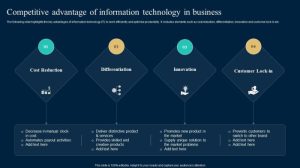
In today’s fiercely competitive marketplace, cultivating strong customer loyalty is no longer a luxury but a necessity for achieving sustainable competitive advantage. Businesses are constantly seeking innovative strategies to not only attract new customers but also retain existing ones, understanding that loyal customers are more profitable and act as powerful brand advocates. This exploration delves into the intricate relationship between competitive advantage and customer loyalty, examining various strategies and tactics businesses employ to build lasting relationships and gain a significant edge in the market.
This examination will cover various competitive advantage strategies, including cost leadership, differentiation, and niche marketing, providing real-world examples and analyzing their strengths and weaknesses. We will also explore how companies foster customer loyalty through effective programs, exceptional service, and strategic relationship building, highlighting key performance indicators (KPIs) to measure success. The analysis will span diverse industries, showcasing best practices and addressing unique challenges in maintaining loyalty in dynamic market conditions.
Defining Competitive Advantage
Competitive advantage is what sets a business apart from its rivals, allowing it to attract and retain customers and achieve superior profitability. It’s about offering something unique or doing something better than the competition, creating a sustainable edge in the marketplace. This advantage can stem from various sources, leading to different competitive strategies.
Types of Competitive Advantages
There are three primary types of competitive advantage: cost leadership, differentiation, and niche. Understanding these strategies is crucial for businesses aiming to thrive in a competitive landscape. Each approach requires a distinct set of capabilities and carries its own set of risks and rewards.
Cost Leadership
Cost leadership involves becoming the lowest-cost producer in an industry while maintaining acceptable quality. This strategy attracts price-sensitive customers and allows for higher profit margins even with lower prices compared to competitors. Walmart, with its efficient supply chain and vast purchasing power, is a prime example of a cost leadership strategy. They focus on operational efficiency to keep costs low, passing the savings on to consumers.
Another example is McDonald’s, which utilizes standardized processes and economies of scale to minimize production costs.
Differentiation
Differentiation focuses on creating a product or service that is perceived as unique and superior in the eyes of the customer. This uniqueness can stem from various factors such as brand image, product features, customer service, or innovation. Apple, known for its design, user experience, and brand prestige, exemplifies a differentiation strategy. They command premium prices because customers perceive their products as superior.
Similarly, luxury car brands like Mercedes-Benz differentiate themselves through high-quality materials, advanced technology, and exclusive branding.
Niche
A niche strategy involves focusing on a specific segment of the market with specialized products or services. This approach allows businesses to cater to the unique needs of a smaller customer base, often commanding premium prices due to the specialized nature of their offerings. A small, artisanal bakery specializing in gluten-free and vegan pastries exemplifies a niche strategy.
They cater to a specific dietary need, commanding a higher price point than larger bakeries with more generic offerings. Another example is a company specializing in software for a particular industry, like medical billing software.
Comparative Analysis of Competitive Advantages
Each competitive advantage type has its strengths and weaknesses. Cost leadership, while offering high profit margins with lower prices, can be vulnerable to price wars and requires constant efficiency improvements. Differentiation, although allowing for premium pricing, requires continuous innovation and strong brand management, and may face challenges from imitators. Niche strategies, while offering high margins and less competition, limit market size and increase vulnerability to changes in the target niche.
Comparison Table of Competitive Strategies
| Competitive Advantage | Strategy | Target Market | Risks |
|---|---|---|---|
| Cost Leadership | Lowest cost producer, high volume | Price-sensitive consumers | Price wars, imitation, cost reduction challenges |
| Differentiation | Unique product/service, premium pricing | Customers valuing quality and uniqueness | Imitation, high R&D costs, maintaining brand image |
| Niche | Specialized products/services for a specific segment | Customers with specific needs | Limited market size, vulnerability to niche changes |
The Role of Customer Loyalty in Achieving Competitive Advantage

Customer loyalty is not merely a desirable outcome; it’s a cornerstone of sustainable competitive advantage. Businesses with high levels of customer loyalty enjoy greater stability, profitability, and resilience against market fluctuations. This is because loyal customers are more likely to make repeat purchases, advocate for the brand, and tolerate price increases, ultimately contributing to a stronger bottom line.Loyal customers represent a significant asset, offering a buffer against competitive pressures and providing a foundation for long-term growth.
The cost of acquiring a new customer is substantially higher than retaining an existing one, making customer retention a critical factor in maximizing profitability. A loyal customer base translates directly into predictable revenue streams and reduced marketing expenses, allowing businesses to reinvest resources in innovation and expansion.
The Link Between Customer Retention and Profitability
Higher customer retention rates directly correlate with increased profitability. This relationship is well-documented across numerous industries. For example, a study by Bain & Company found that increasing customer retention rates by just 5% can increase profits by 25% to 95%. This dramatic impact stems from several factors: reduced acquisition costs, increased lifetime value of customers, and the positive word-of-mouth marketing generated by satisfied loyal customers.
The reduced need for constant marketing campaigns to attract new customers frees up significant resources, further enhancing profitability. This allows companies to focus on refining their products or services and enhancing the overall customer experience.
Methods for Fostering Customer Loyalty
Companies employ various strategies to cultivate and maintain customer loyalty. These methods often involve a combination of tangible rewards and intangible relationship building. Loyalty programs, for instance, offer points, discounts, or exclusive access to incentivize repeat purchases and engagement. These programs can be tiered, offering increasing benefits to higher-spending customers, thereby fostering deeper loyalty. Beyond rewards programs, exceptional customer service plays a pivotal role.
Prompt, helpful, and personalized support creates a positive experience that encourages customers to return. Proactive communication, such as personalized emails or targeted offers based on past purchase history, also strengthens the customer-brand relationship. This proactive approach demonstrates a genuine interest in the customer’s needs and preferences, going beyond simple transactional interactions.
Strategies for Building Stronger Customer Relationships
Building strong customer relationships requires a multifaceted approach that goes beyond simple transactional exchanges. Here are some key strategies companies can employ:
- Personalized Communication: Tailor messages and offers to individual customer preferences and past behavior.
- Proactive Customer Service: Anticipate customer needs and address issues before they escalate.
- Community Building: Create opportunities for customers to interact with each other and the brand (e.g., online forums, social media groups).
- Feedback Mechanisms: Actively solicit and respond to customer feedback, demonstrating a commitment to continuous improvement.
- Loyalty Programs with Meaningful Rewards: Offer rewards that are genuinely valuable to customers, not just tokenistic gestures.
- Exclusive Content and Experiences: Provide loyal customers with access to special events, early product releases, or exclusive content.
- Empathetic and Personalized Support: Train staff to provide compassionate and understanding support, resolving issues efficiently and effectively.
Building Customer Loyalty
Building strong customer loyalty is paramount for achieving a sustainable competitive advantage. It’s not just about attracting new customers; it’s about cultivating long-term relationships that translate into repeat business, positive word-of-mouth referrals, and ultimately, higher profitability. This section explores key strategies and tactics for fostering customer loyalty, including identifying influential factors, comparing loyalty programs, and demonstrating effective measurement methods.
Key Factors Influencing Customer Loyalty
Several interconnected factors significantly influence customer loyalty. Understanding these factors allows businesses to tailor their strategies for maximum impact. These factors range from the tangible aspects of the product or service to the intangible aspects of the customer experience.
- Product/Service Quality: A high-quality product or service that consistently meets or exceeds customer expectations is foundational to loyalty. This includes reliability, functionality, and value for money.
- Customer Service Excellence: Responsive, helpful, and empathetic customer service is crucial. Addressing customer issues promptly and efficiently fosters positive experiences and builds trust.
- Positive Brand Experience: A strong brand identity and consistent brand messaging across all touchpoints create a positive overall customer experience. This includes consistent communication, visual identity, and brand values.
- Personalized Interactions: Customers value feeling valued and understood. Personalized communication, tailored recommendations, and customized offers demonstrate that the business cares about their individual needs.
- Community Building: Creating a sense of community among customers can foster loyalty. This can be achieved through social media engagement, loyalty programs, or exclusive events.
Comparison of Customer Loyalty Programs
Various loyalty programs exist, each with its own strengths and weaknesses. The effectiveness of a program depends on its alignment with the specific business and its customer base.
- Points-based programs: These reward customers with points for purchases, which can be redeemed for discounts or merchandise. While popular, they can become complex and require careful management to avoid devaluing the points.
- Tiered programs: These offer increasing benefits as customers reach higher tiers based on spending or engagement. This creates a sense of exclusivity and encourages increased spending.
- Membership programs: These offer exclusive benefits and perks to members, such as early access to sales, free shipping, or special events. They focus on building a stronger relationship with customers.
- Co-branded programs: These partner with other businesses to offer broader rewards and benefits. This can expand reach and offer more diverse options for customers.
Measuring Customer Loyalty
Measuring customer loyalty provides valuable insights into program effectiveness and overall customer satisfaction. Key metrics include:
- Net Promoter Score (NPS): This measures customer willingness to recommend a business to others. It’s calculated by subtracting the percentage of detractors (those who rate the business 0-6 on a 0-10 scale) from the percentage of promoters (those who rate it 9-10).
- Customer Lifetime Value (CLTV): This predicts the total revenue a business expects to generate from a single customer over their entire relationship. It’s a crucial metric for understanding the long-term value of customer loyalty.
- Customer Retention Rate: This measures the percentage of customers who continue to do business with a company over a specific period. High retention rates indicate strong customer loyalty.
Case Study: Amazon’s Customer Loyalty
Amazon’s success is largely attributed to its robust customer loyalty program, Amazon Prime. Prime offers free shipping, access to streaming services (Prime Video), and other benefits for an annual fee. This program has dramatically increased customer retention and lifetime value. By offering a compelling value proposition and continuously improving the service, Amazon has fostered unparalleled customer loyalty, creating a significant competitive advantage.
The program’s success is evidenced by its massive subscriber base and its contribution to Amazon’s overall dominance in e-commerce. The continuous evolution of Prime, adding new benefits and features, further solidifies its position as a key driver of customer loyalty and competitive advantage.
Competitive Advantage and Customer Loyalty in Different Industries
The interplay between competitive advantage and customer loyalty varies significantly across industries. Understanding these dynamics is crucial for businesses aiming to thrive in today’s competitive landscape. Different industries face unique challenges and opportunities in building and maintaining loyal customer bases, requiring tailored strategies.
Competitive Advantage and Customer Loyalty in the Technology Industry
In the technology sector, rapid innovation and intense competition necessitate a strong focus on customer loyalty. Companies like Apple cultivate loyalty through a seamless user experience, brand prestige, and a robust ecosystem of interconnected products and services. This creates a high switching cost for consumers, fostering long-term relationships. Building loyalty involves consistently delivering cutting-edge technology, providing excellent customer support, and fostering a strong sense of community among users.
However, maintaining this loyalty is challenging due to the constant influx of new technologies and competitors offering similar functionalities at potentially lower prices. Companies must continuously innovate and adapt to remain relevant and maintain their customer base.
Competitive Advantage and Customer Loyalty in the Retail Industry
The retail industry relies heavily on customer loyalty programs and personalized experiences to gain a competitive edge. Companies like Amazon utilize data-driven insights to offer personalized recommendations and targeted promotions, strengthening customer relationships. Building loyalty involves offering competitive pricing, convenient shopping options, and exceptional customer service. Challenges include managing inventory effectively, adapting to evolving consumer preferences, and competing with both online and brick-and-mortar rivals.
Maintaining loyalty requires a constant focus on providing value and enhancing the overall shopping experience.
Competitive Advantage and Customer Loyalty in the Healthcare Industry
In the healthcare industry, trust and patient satisfaction are paramount in building customer loyalty. Hospitals and clinics that prioritize patient care, communication, and personalized treatment plans often foster strong patient relationships. Building loyalty involves investing in advanced medical technologies, employing highly skilled medical professionals, and creating a comfortable and supportive environment. Challenges include managing patient expectations, navigating complex regulatory frameworks, and ensuring data privacy and security.
Maintaining loyalty requires consistent high-quality care and a strong commitment to ethical practices.
| Industry | Competitive Advantage Source | Loyalty Building Strategy | Loyalty Maintenance Challenge |
|---|---|---|---|
| Technology | Innovation, Ecosystem, Brand | Seamless UX, Superior Support, Community Building | Rapid Technological Change, Intense Competition |
| Retail | Personalized Experience, Convenience, Pricing | Loyalty Programs, Targeted Promotions, Excellent Service | Evolving Consumer Preferences, Online Competition |
| Healthcare | Trust, Patient Care, Skilled Professionals | Personalized Treatment, Strong Communication, Supportive Environment | Regulatory Compliance, Managing Expectations, Data Security |
Maintaining Competitive Advantage in a Changing Market
The modern business landscape is characterized by constant flux. Rapid technological advancements, shifting consumer preferences, and increased global competition create a dynamic environment where maintaining a competitive advantage requires proactive adaptation and a relentless focus on customer loyalty. Companies that fail to evolve risk becoming obsolete, losing market share, and ultimately, failing.The impact of disruptive technologies on both customer loyalty and competitive advantage is profound.
New technologies often create entirely new markets or drastically alter existing ones, presenting both opportunities and threats. For instance, the rise of e-commerce significantly disrupted traditional brick-and-mortar retail, forcing many companies to adapt or face extinction. Similarly, the emergence of social media has fundamentally changed how businesses interact with and understand their customers. Companies that effectively leverage these technologies to enhance customer experience and build stronger relationships gain a competitive edge, while those that lag behind risk losing customers to more agile competitors.
Disruptive Technologies and Their Impact
Disruptive technologies, such as artificial intelligence, machine learning, and the Internet of Things (IoT), are reshaping industries at an unprecedented pace. These technologies offer businesses the opportunity to personalize customer experiences, optimize operations, and develop innovative products and services. However, companies must be prepared to invest in these technologies and adapt their business models accordingly. Failure to do so can lead to a loss of competitive advantage and a decline in customer loyalty.
For example, companies that fail to embrace e-commerce risk losing customers to online retailers offering greater convenience and choice. Similarly, businesses that don’t utilize data analytics to understand customer preferences may struggle to offer personalized experiences, leading to dissatisfaction and customer churn.
Adapting Strategies for a Dynamic Market
Maintaining a competitive advantage in a dynamic market requires a multifaceted approach. Companies need to be agile, responsive, and innovative. This involves developing robust market intelligence systems to track emerging trends and anticipate changes in customer demand. It also requires a willingness to experiment with new technologies and business models, and to embrace a culture of continuous learning and improvement.
Successful adaptation often involves strategic partnerships and collaborations, allowing companies to leverage external expertise and resources. For instance, a traditional clothing retailer might partner with a tech company to develop a personalized online styling service, enhancing the customer experience and improving customer loyalty.
The Importance of Innovation in Preserving Customer Loyalty
Innovation is crucial for maintaining customer loyalty in a rapidly changing market. Customers are constantly seeking new and improved products and services, and companies that fail to innovate risk losing them to competitors offering more compelling options. Innovation doesn’t necessarily mean creating entirely new products; it can also involve improving existing products, enhancing customer service, or developing new business models.
For example, a bank might introduce a new mobile banking app with enhanced security features and personalized financial management tools to improve customer satisfaction and loyalty. Companies that prioritize innovation foster a culture of creativity and experimentation, encouraging employees to develop new ideas and solutions.
Proactive Response to Market Changes
A visual representation of how companies can proactively respond to market changes would be a flowchart. The flowchart would begin with a box labeled “Market Analysis & Trend Identification,” leading to a box labeled “Customer Feedback & Needs Assessment.” From there, two branches would emerge: one leading to “Product/Service Innovation & Improvement” and the other to “Operational Efficiency & Process Optimization.” Both branches would converge into a central box labeled “Enhanced Customer Experience & Loyalty.” Finally, an arrow would point from this box to a final box labeled “Sustained Competitive Advantage.” This flowchart visually illustrates how companies can use market analysis, customer feedback, and operational improvements to enhance customer experience, fostering loyalty and maintaining a competitive edge.
Measuring the Impact of Customer Loyalty on Competitive Advantage
Accurately measuring the impact of customer loyalty on competitive advantage is crucial for businesses seeking sustainable growth. Understanding this relationship allows companies to refine their strategies, optimize resource allocation, and ultimately, maximize profitability. This involves employing both quantitative and qualitative methods to gain a comprehensive understanding of the link between loyal customers and competitive success.
Effective measurement requires a multifaceted approach, combining hard data with insightful qualitative analysis. Quantitative methods provide concrete numbers to track progress and demonstrate ROI, while qualitative methods offer deeper insights into the
-why* behind the numbers, enriching the overall understanding of customer behavior and its impact on the competitive landscape.
Quantitative Methods for Measuring Customer Loyalty’s Impact
Quantitative methods focus on measurable data to assess the relationship between customer loyalty and competitive advantage. These methods provide objective insights into the financial and operational impact of loyal customers. This includes analyzing key performance indicators (KPIs) that directly reflect the strength of customer loyalty and its contribution to profitability and market share.
Several KPIs can effectively capture the impact of customer loyalty. These metrics should be tracked consistently over time to identify trends and measure the effectiveness of loyalty initiatives.
- Customer Lifetime Value (CLTV): This metric predicts the total revenue a business expects to generate from a single customer over the entire duration of their relationship. A higher CLTV indicates stronger customer loyalty and a more robust competitive position.
- Customer Retention Rate: This measures the percentage of customers who continue to do business with a company over a specific period. High retention rates directly correlate with a stronger competitive advantage, as it demonstrates the ability to retain valuable customers.
- Net Promoter Score (NPS): This measures customer willingness to recommend a company to others. A higher NPS suggests greater customer satisfaction and loyalty, leading to increased word-of-mouth marketing and a stronger competitive edge.
- Repeat Purchase Rate: This indicates the frequency with which customers make repeat purchases. A high repeat purchase rate signals strong customer loyalty and contributes significantly to revenue stability and growth.
- Churn Rate: The inverse of retention rate, this metric shows the percentage of customers who stop doing business with a company. A low churn rate is essential for maintaining a strong competitive position.
Qualitative Methods for Measuring Customer Loyalty’s Impact
Qualitative methods provide valuable context and deeper understanding to supplement quantitative data. These methods help explain the
why* behind the numbers, offering rich insights into customer perceptions, motivations, and experiences.
Qualitative data helps companies understand the drivers of customer loyalty and identify areas for improvement. This information is crucial for developing targeted strategies to enhance customer relationships and strengthen competitive advantage.
- Customer Surveys and Feedback: Gathering direct feedback through surveys, interviews, and focus groups provides valuable insights into customer satisfaction, loyalty drivers, and areas for improvement. Open-ended questions allow for richer, more nuanced responses.
- Social Media Monitoring: Tracking brand mentions and sentiment on social media platforms provides valuable real-time feedback on customer perceptions and loyalty. This helps identify potential issues and proactively address customer concerns.
- Customer Reviews and Testimonials: Analyzing online reviews and testimonials provides valuable insights into customer experiences and satisfaction levels. Positive reviews can be leveraged for marketing purposes, further strengthening brand reputation and loyalty.
Return on Investment (ROI) Framework for Customer Loyalty Initiatives
Calculating the ROI of customer loyalty initiatives is essential for justifying investment and demonstrating the value of loyalty programs and strategies. A robust framework should incorporate both quantitative and qualitative data.
A simple framework involves comparing the costs of loyalty initiatives (e.g., rewards programs, personalized communication) against the increased revenue and reduced costs resulting from improved customer retention, increased CLTV, and reduced churn. This calculation can be expressed as a percentage or a monetary value.
ROI = (Increased Revenue + Reduced Costs – Cost of Loyalty Initiatives) / Cost of Loyalty Initiatives
For example, a company might invest $100,000 in a loyalty program. If this leads to a $200,000 increase in revenue and a $50,000 reduction in customer acquisition costs, the ROI would be (($200,000 + $50,000)
-$100,000) / $100,000 = 1.5 or 150%.
Effective Metrics for Assessing the Relationship Between Customer Loyalty and Competitive Advantage
The most effective metrics for assessing the relationship between customer loyalty and competitive advantage are those that provide a holistic view, combining both quantitative and qualitative insights. These metrics should be tracked consistently over time to monitor progress and identify areas for improvement.
- Customer Lifetime Value (CLTV): A high CLTV indicates strong customer loyalty and a robust competitive position.
- Customer Retention Rate: High retention rates directly correlate with a stronger competitive advantage.
- Net Promoter Score (NPS): A higher NPS suggests greater customer satisfaction and loyalty, leading to increased word-of-mouth marketing.
- Customer Satisfaction (CSAT): High CSAT scores are a strong indicator of customer loyalty and positive brand perception.
- Qualitative Customer Feedback: In-depth analysis of customer feedback provides crucial insights into the drivers of loyalty and areas for improvement.
Ultimately, achieving a sustainable competitive advantage hinges on cultivating deep and lasting customer relationships. By understanding the nuances of different competitive strategies, implementing effective loyalty programs, and consistently exceeding customer expectations, businesses can build a loyal customer base that fuels growth and profitability. Proactive adaptation to market changes and continuous innovation are critical for maintaining this advantage in the long term, ensuring that businesses remain resilient and competitive in an ever-evolving landscape.
The journey towards lasting success requires a holistic approach that prioritizes both competitive differentiation and the cultivation of enduring customer loyalty.
FAQs
What is the difference between customer satisfaction and customer loyalty?
Customer satisfaction is a measure of how pleased a customer is with a product or service, while customer loyalty reflects a customer’s repeated purchasing behavior and advocacy for a brand over time. A satisfied customer may not necessarily be loyal, but a loyal customer is almost always satisfied.
How can small businesses build customer loyalty?
Small businesses can foster loyalty through personalized service, building strong community relationships, offering exclusive rewards programs tailored to their customer base, actively soliciting and responding to feedback, and creating a memorable brand experience.
What are some common pitfalls to avoid when building customer loyalty programs?
Common pitfalls include overly complex programs, insufficient rewards, poor communication, lack of personalization, and failing to integrate the program seamlessly into the overall customer experience.
How can I measure the ROI of customer loyalty initiatives?
Measure ROI by tracking metrics like customer lifetime value (CLTV), customer retention rate, repeat purchase rate, and the cost of acquiring a new customer versus retaining an existing one. Compare these figures before and after implementing loyalty initiatives.